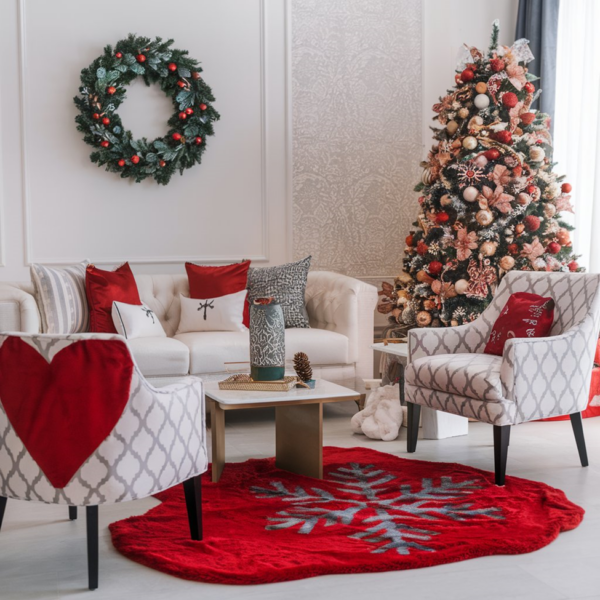
Christmas decorating is exciting until your living room starts looking like Santa’s storage room. Between the garlands, throw pillows, ornaments, festive signs, and decorations you bought because they were simply too cute to leave behind, things can get crowded surprisingly quickly.
The secret to a beautifully decorated Christmas home isn’t adding more decorations. It’s choosing the right pieces, giving them room to shine, and creating a festive atmosphere that feels warm, elegant, and intentional. You can have all the Christmas magic without sacrificing your countertops, overflowing your shelves, or squeezing past a forest of decorative objects.
From simplifying your color palette to styling your mantel and choosing smarter storage solutions, these practical tips will help you create a Christmas home that feels cozy, polished, and wonderfully festive without the clutter.
1. Choose a Simple Christmas Color Palette
One of the easiest ways to prevent Christmas decorations from making your home feel cluttered is to limit your color palette. Too many competing colors can make even a spacious living room feel visually busy, especially when every ornament, cushion, garland, and tabletop accessory demands attention.
Start with two or three complementary colors and repeat them throughout your home. Classic red, green, and cream create a timeless Christmas look, while ivory, forest green, and gold feel elegant and sophisticated. If you prefer a modern aesthetic, white, soft beige, and natural wood can create a beautifully understated holiday atmosphere.
The best part is that you don’t have to replace all your existing decorations. Simply group the pieces that work with your chosen palette and put the rest away for another year. Your home will immediately feel more coordinated, and your favorite decorations will stand out instead of competing with one another.
Designer Tip
Choose one dominant color, one supporting color, and one accent color. For example, use cream as your foundation, forest green for the main festive elements, and gold for small decorative touches. Repeating these colors in different rooms creates a cohesive look without making the entire house feel identical.
2. Decorate Your Christmas Tree Without Overloading It
A Christmas tree is often the main attraction of holiday decorating, but covering every branch with ornaments, ribbons, flowers, oversized bows, and multiple strands of tinsel can make it look crowded rather than luxurious.
Begin with a well-shaped tree and choose decorations that complement its size. Use a balanced combination of ornaments, lights, and a few statement pieces, allowing some greenery to remain visible. If you love a full, glamorous tree, create depth by placing a few ornaments slightly inside the branches rather than hanging everything along the outer edges.
Pay attention to scale, too. Large ornaments work beautifully on a tall tree, while smaller trees generally look better with more delicate decorations. Finish with a simple tree topper and a neat tree skirt or basket that complements the rest of your decor.
Honestly, you don’t need 300 ornaments to create a beautiful Christmas tree. Sometimes the ornaments you leave off are just as important as the ones you hang.
Why This Works
Visible greenery creates breathing room between decorations, making the tree look fuller and more intentional. A consistent color scheme also helps individual ornaments work together instead of competing for attention.
3. Keep Your Christmas Mantel Simple and Balanced
A Christmas mantel can become cluttered quickly because it is such a tempting place to display every festive accessory you own. Between stockings, garlands, candles, miniature houses, framed prints, and decorative signs, there is plenty of opportunity to overdo it.
Instead, choose one main feature and build the arrangement around it. A simple evergreen garland can serve as the foundation, with a few candleholders, subtle ornaments, or a statement mirror above it. You can also skip the garland and create a more modern display using two or three carefully selected decorative objects.
Think about visual balance rather than making both sides perfectly identical. A taller arrangement on one side can be balanced with a cluster of smaller pieces on the other. The goal is to create a mantel that feels finished without leaving every inch covered.
Luxury Look for Less
Use greenery, a few beautiful candleholders, and one statement piece instead of buying an entire collection of matching decorations. Simple materials and thoughtful placement can make an inexpensive mantel arrangement look surprisingly high-end.
4. Leave Your Countertops Mostly Clear
Kitchen countertops are among the easiest places for Christmas clutter to accumulate. A festive cookie jar appears, followed by a decorative tray, a miniature tree, a seasonal sign, and suddenly there is barely enough room to prepare dinner.
Choose one or two areas for seasonal displays and leave the rest of the countertops available for everyday tasks. A small Christmas arrangement near the coffee maker or a tray beside the backsplash can add plenty of festive charm without taking over the entire kitchen.
You can also make everyday essentials part of the decoration. A beautiful wooden cutting board, a ceramic utensil holder, and a bowl of seasonal fruit can look lovely together without requiring additional ornaments. Add a festive dish towel or a small evergreen sprig to bring in the Christmas feeling.
Personal Take
A kitchen that looks beautiful but has nowhere to put a chopping board is not winning any decorating awards from me. Keep the festive details where they look good and let the working areas do their job.
5. Use Greenery Instead of Lots of Small Decorations
Fresh or realistic greenery is one of the easiest ways to make a home feel festive without filling it with dozens of decorative objects.
A single garland along a staircase, a wreath on a wall, or a simple arrangement of evergreen branches in a ceramic vase can create a strong seasonal statement. Because greenery has natural texture and visual interest, it often makes a bigger impact than several small ornaments scattered across the same area.
Try repeating the same type of greenery in a few strategic locations. A wreath near the entryway, a garland along the mantel, and a small arrangement on the dining table can connect the rooms without requiring every surface to be decorated.
For an elegant look, combine greenery with subtle accents such as cream ribbon, natural wood, or a few brass details. You can keep the arrangement simple and still achieve that beautifully layered Christmas atmosphere.
Watch Out For
Avoid draping greenery across every shelf, doorway, window, and cabinet. Repeating a few well-placed arrangements is more effective than decorating every possible edge. Keep natural greenery away from open flames and heat sources, and secure garlands properly.
6. Decorate in Layers Instead of Adding More Objects
A room can feel festive without having a large number of Christmas decorations. The trick is to use a few layers of texture, color, and lighting to create depth.
For example, a neutral sofa can feel ready for Christmas with a green throw, two coordinated cushions, and a soft blanket folded over one arm. Add a simple wreath or a small festive arrangement nearby, and the entire seating area feels seasonal without requiring a collection of miniature decorations on every surface.
The same approach works in bedrooms, dining rooms, and entryways. A textured runner, a seasonal centerpiece, or a change of cushion covers can create a noticeable difference without adding unnecessary objects.
Choose materials that complement one another, such as linen, velvet, wool, wood, and greenery. Mixing textures adds richness while keeping the overall design relatively simple.
Why This Works
Layered textures create visual depth without requiring lots of separate decorative pieces. A few carefully chosen items can make a room feel complete, warm, and thoughtfully styled.
7. Swap Everyday Accessories Instead of Adding Christmas Extras
One of the smartest ways to decorate for Christmas is to replace some of your regular accessories rather than adding new ones on top of everything you already have.
If your coffee table usually holds a stack of books, a vase, and a decorative bowl, temporarily swap one or two items for a festive arrangement. Replace your everyday cushion covers with Christmas colors, switch a regular table runner for a seasonal design, or display holiday-themed artwork in an existing frame.
This approach keeps the number of objects in your home relatively stable while still giving the rooms a fresh seasonal look. It also saves storage space because you’re rotating decorations instead of continuously expanding your collection.
You don’t need Christmas versions of everything, either. A wooden bowl, a cream ceramic vase, or a brass candleholder can work beautifully throughout the year. Let a few seasonal pieces provide the holiday character.
Luxury Look for Less
Shop your own home before buying new decorations. Reusing trays, vases, baskets, and candleholders can save money while creating a more coordinated Christmas look.
8. Keep Your Coffee Table Styling Under Control
Coffee tables seem to attract Christmas decorations like magnets. A candle appears, then a bowl of ornaments, then a miniature tree, a stack of holiday books, and a decorative tray that somehow occupies half the available surface.
Instead, choose a simple arrangement that leaves plenty of room for drinks, snacks, and everyday use. A tray with one candle, a small vase of greenery, and a single decorative object can look beautiful without overwhelming the table.
If you have a small coffee table, keep the arrangement especially compact. On a larger table, you can create a little more variation with a low bowl and a few carefully grouped objects. Make sure the decorations do not interfere with conversation or block everyone’s view.
And please remember that a coffee table is allowed to hold coffee. Revolutionary, I know.
Designer Tip
Use a tray to group smaller decorative items together. It creates a defined arrangement, makes the objects look intentional, and allows you to move everything at once when you need the table for entertaining.
9. Choose One Statement Decoration Per Room
Not every room needs a Christmas tree, a garland, a wreath, a festive sign, decorative pillows, and a collection of seasonal figurines. Giving each room one main decorative feature can create a much more balanced home.
In the living room, let the Christmas tree take center stage. In the dining room, choose a beautiful centerpiece. In the entryway, a wreath or an elegant console arrangement may be enough. A bedroom might need nothing more than festive bedding and a small strand of warm lights.
Once you have chosen the main feature, add only a few supporting details if the room needs them. This makes decorating easier and gives each area a distinct purpose without creating unnecessary visual competition.
The result is a home that feels festive as you move from room to room, rather than one where every corner is trying to be the main attraction.
Personal Take
I love a beautifully decorated Christmas home, but not every room needs to audition for the cover of a holiday magazine. Sometimes one gorgeous detail does more than ten smaller ones.
10. Make Your Entryway Festive Without Blocking It
Your entryway sets the tone for the rest of your home, but it is also one of the easiest areas to overcrowd. A large wreath, a decorative tree, several lanterns, baskets, signs, and piles of seasonal accessories can quickly make the entrance difficult to use.
Start with one focal point, such as a wreath on the door or a simple garland around the mirror. If you have a console table, style it with a small arrangement of greenery and one or two complementary accessories. Keep the surface open enough for keys, bags, and other everyday essentials.
If you want a small Christmas tree near the entrance, choose a size that fits comfortably without narrowing the walking path. Keep shoes, coats, and storage baskets neatly organized so the festive decor does not compete with daily necessities.
Why This Works
A clear entryway makes your home feel more spacious and welcoming. A single statement decoration creates a strong first impression without making the entrance feel cramped.
11. Use Baskets to Hide Everyday Clutter
Christmas decorations look much better when they are not competing with loose blankets, toys, remote controls, magazines, and other everyday items.
Decorative baskets are a practical solution because they help contain the things you use regularly while adding texture to your decor. Place a basket beside the sofa for extra blankets, use a lidded basket for toys, or keep a small one near the entryway for frequently used accessories.
Choose materials that complement your home, such as natural woven fibers, painted wood, or fabric-covered storage. In a living room, a basket in a warm neutral shade can blend into the decor while keeping the room tidy.
The idea is not to hide everything you own. It is to give everyday belongings a designated place so your Christmas decorations have room to stand out.
Designer Tip
Choose storage baskets that are large enough to be useful but proportionate to the room. Too many baskets can create clutter of their own, so focus on the areas where mess tends to accumulate.
12. Decorate Your Dining Table With a Low Centerpiece
A Christmas dining table can look stunning without being covered in elaborate arrangements, towering candles, and decorative objects that need to be moved before anyone can eat.
Start with a simple table runner and a low centerpiece made from evergreen branches, a few ornaments, or a small arrangement of seasonal flowers. Add a couple of candleholders or elegant napkin rings if you want a more formal look.
For a natural Christmas table, combine greenery with wood, cream ceramics, and linen napkins. For a more glamorous setting, use clear glass, gold accents, and white dinnerware. Keeping the palette consistent will help the table look polished without requiring too many decorations.
Most importantly, leave enough room for serving dishes and comfortable conversation. Your centerpiece should complement the meal, not force everyone to pass the potatoes around a decorative forest.
Watch Out For
Avoid tall centerpieces that block people’s view across the table. If you use candles, position them safely away from greenery, loose fabrics, and anything else that could catch fire.
13. Be Selective With Christmas Throw Pillows
Festive cushions can make a living room feel cozy, but adding too many can leave your sofa looking crowded and leave your guests wondering where to sit.
Instead of replacing every cushion, choose two or three seasonal covers that work with your existing upholstery. Deep green velvet, cream knit, muted red, or subtle tartan can introduce Christmas colors without making the sofa feel overly themed.
Mix textures rather than combining too many competing patterns. For example, pair one patterned cushion with a solid velvet cushion and a textured neutral design. This gives the sofa visual interest while maintaining a cohesive look.
If you already have a neutral living room, a few festive cushion covers may be all you need to create a seasonal update. Store your regular covers away until January, and you will avoid overcrowding both your sofa and your storage cupboard.
Luxury Look for Less
Change cushion covers rather than buying entirely new pillows. Good-quality covers in rich fabrics can create an expensive-looking finish at a fraction of the cost of replacing the whole cushion collection.
14. Use Warm Lighting Instead of More Decorations
Sometimes a home needs better lighting rather than more Christmas accessories. Warm, layered lighting can create a festive atmosphere while keeping your surfaces clear.
Use warm-white string lights on the Christmas tree, a suitable garland, or a shelf where the lights can be safely secured. Add battery-operated candles to a console table or use your existing lamps to create a softer evening glow.
Avoid placing bright, flashing lights in every corner unless that is specifically the look you love. A more restrained approach often feels calmer and more elegant, especially when paired with natural greenery and neutral textiles.
You can also use lighting to emphasize your favorite decorations. A softly illuminated tree or a gentle glow around a mantel will naturally draw attention to those areas without requiring additional ornaments.
Cozy Factor
Warm lighting creates a relaxed atmosphere that makes even a simply decorated room feel special. It adds warmth and depth while allowing the Christmas tree, greenery, and other key pieces to remain the main focus.
15. Keep Bedroom Christmas Decor Soft and Minimal
Bedrooms should feel restful, so Christmas decorating works best when it adds warmth without turning the room into another busy display.
Start with seasonal bedding, a soft throw, or a couple of festive cushions. Deep green, warm cream, burgundy, and muted gold can create a cozy holiday look without overwhelming the bedroom’s existing color scheme.
If you want additional decoration, consider a small wreath, a miniature tree on a suitable side table, or a strand of warm-white lights positioned safely away from bedding and other flammable materials. Keep bedside tables relatively clear so you still have room for a lamp, a book, and the things you actually use.
A few coordinated changes can make the bedroom feel festive while preserving the calm atmosphere you want at the end of the day.
Designer Tip
Choose Christmas bedding or textiles that complement your everyday decor. You will get a more cohesive result if the festive colors work with your walls, curtains, and furniture rather than competing with them.
16. Create a Dedicated Spot for Christmas Cards and Small Decor
Christmas cards, gift tags, little ornaments, and handmade decorations can easily spread across multiple surfaces throughout the house. Giving them one designated display area keeps them organized and gives sentimental items a place to shine.
You could arrange your Christmas cards on a simple wall display, hang them along a ribbon, or place them in a decorative holder on a console table. Add a small vase of greenery or a few warm lights if the arrangement needs a finishing touch.
For handmade decorations from children or family members, consider dedicating a shelf or a section of the mantel to those pieces. You can celebrate the memories without having every available surface filled with small objects.
This approach is particularly useful if you receive lots of Christmas cards or enjoy collecting ornaments over the years. It allows you to display the pieces that matter most while keeping the rest safely stored.
Personal Take
Sentimental decorations are often the most meaningful ones, even when they do not match a perfectly coordinated color palette. Give them a proper place instead of scattering them everywhere, and they can become part of the decor without creating visual chaos.
Before You Go
Decorating your home for Christmas without making it feel cluttered comes down to a simple idea: you don’t need more decorations to create more Christmas magic. You need a thoughtful plan, a few beautiful focal points, and enough breathing room for everything to work together.
Choose a cohesive color palette, let your Christmas tree or mantel take center stage, use greenery and warm lighting to create atmosphere, and keep everyday surfaces functional. Swap existing accessories for seasonal pieces, display your favorite decorations in groups, and resist the urge to fill every empty corner.
Most importantly, create a home that suits the way you actually live. Your living room should still be comfortable, your kitchen should still be practical, and your dining table should still have room for Christmas dinner.
The most beautiful Christmas homes are not necessarily the ones with the most decorations. They are the ones that feel warm, welcoming, and thoughtfully put together — where the festive details make everyday moments special without getting in the way of the memories you are making.